01 · Original recording
The goal commentary
The recording supplied for the project, kept here as it arrived in the archive.

Football Club Riograndense · Rio Grande, Brazil
A recreation built from the commentary and the club’s visual references.
Film · Produced in 2026 · 1m34sAntônio Azambuja Nunes, known as Nico, is one of Football Club Riograndense’s idols in Rio Grande. Nicknamed O Bombardeador, he was the top scorer in the 1967 Rio Grande do Sul State Championship, with 17 goals.
This film recreates a goal he scored against Guarany Atlântico, from Santa Maria, at the old Torquato Pontes stadium. The original commentary of the play, together with photographs and references shared by the club, was the starting point for reconstructing the scene.
The date and competition of this match have not yet been confirmed. The year 1967 refers to Nico’s top-scorer achievement.
The recording began with the play already underway.
The recording supplied by Riograndense goes straight into the play. Listening to it and looking through the archive photographs, I began to imagine what came before: supporters arriving, the stadium filling up and the players preparing to take the field.
01 · Original recording
The recording supplied for the project, kept here as it arrived in the archive.
02 · Recreated opening
We created a radio-style introduction to accompany the arrival at the stadium and give context to the moments before the play. This part of the commentary was generated with AI.
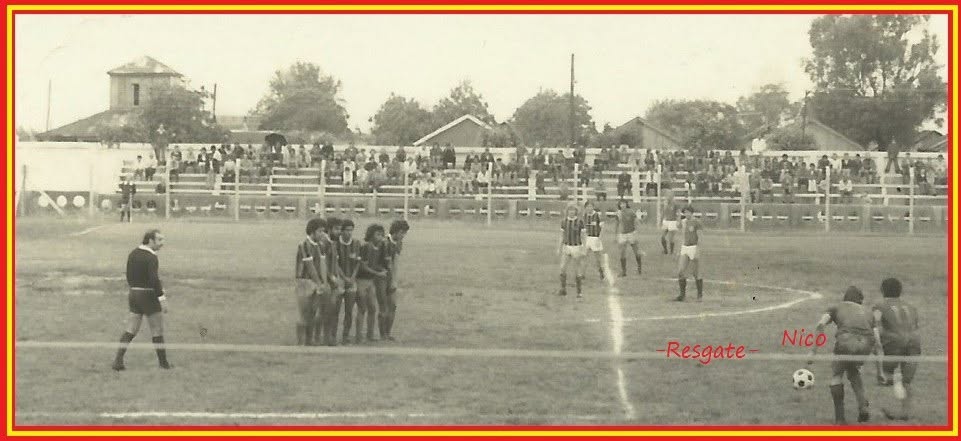
The covered stand, the steps and the wall with circular openings can all be seen in the supplied photographs. These details guided the recreation of Torquato Pontes, including scenes shot from positions not shown in those records.
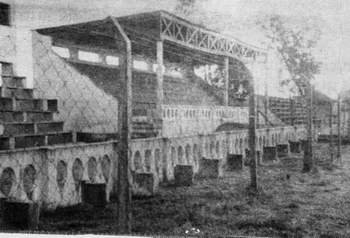
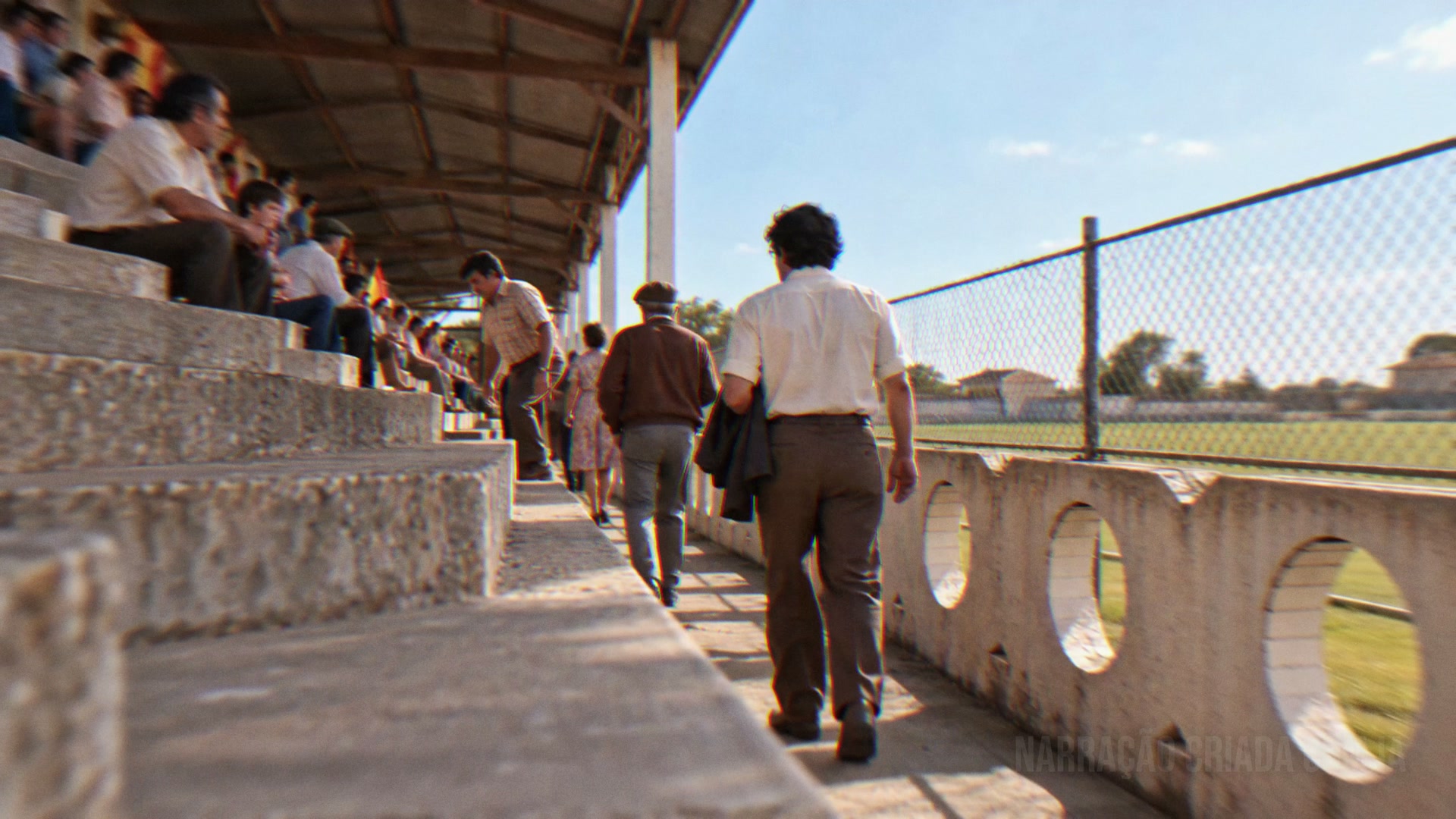
In the photograph, the stadium is empty; in the film, the passage fills with people finding seats and meeting friends. The structure comes from the references, while the movements and small encounters were imagined for the scene.
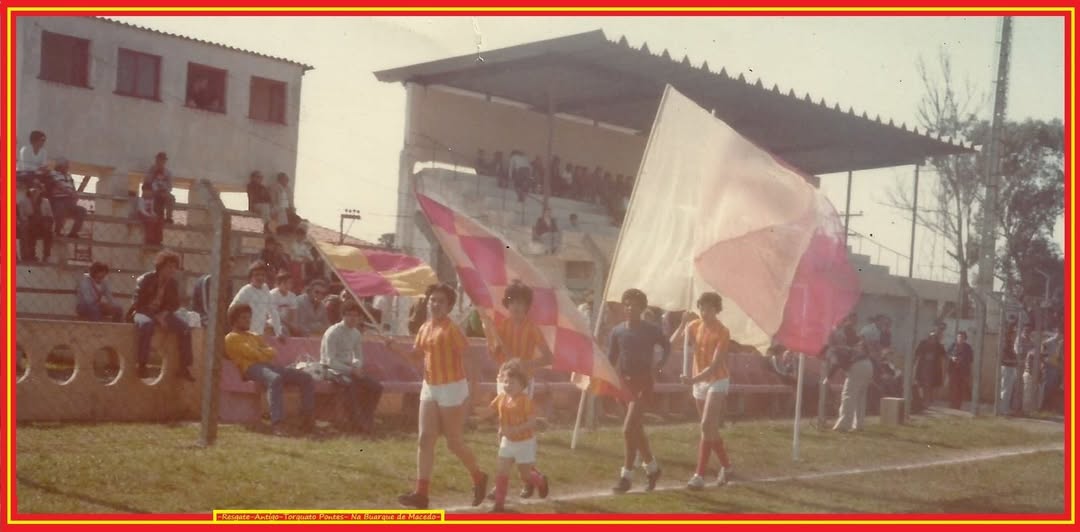
The photograph shows red and yellow in the flags and clothing, as well as the relationship between the supporters, the stand and the pitch. It helped shape the way people inhabit this space.
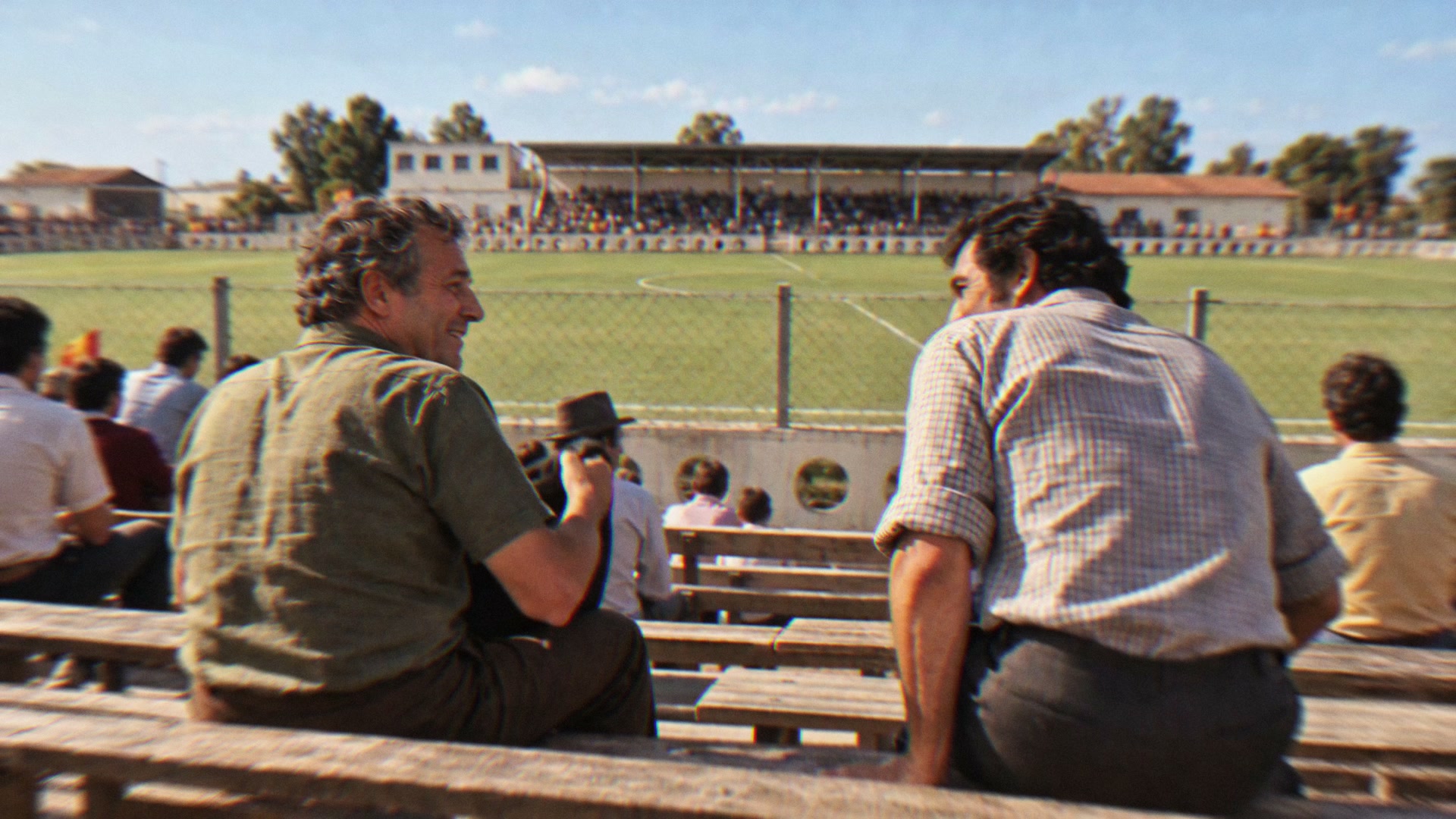
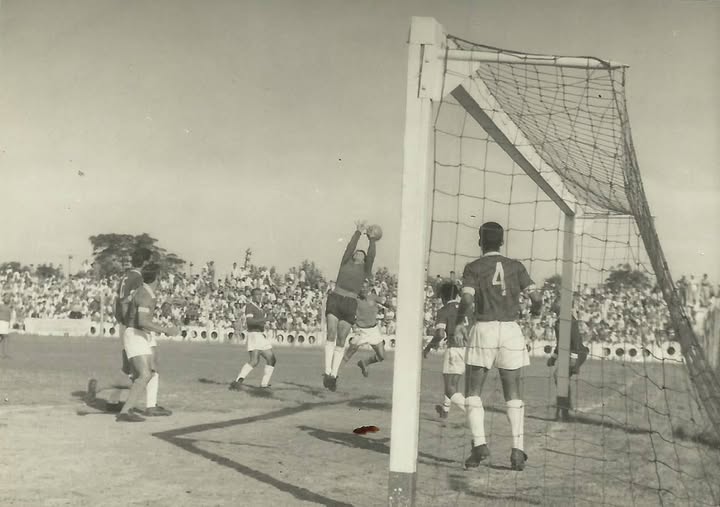
The dates of these photographs have not been confirmed. They are references of the stadium, not records attributed to the match in which the goal was scored.
The photographs also show the uncovered terrace, the houses behind it and how close supporters were to the pitch. The view beside the goal reveals the net, the boundary wall and the crowd across the uncovered section.
The wardrobe references guided the colours, collars, badges and trim of the shirts. Each team needed to remain recognisable across the different shots of the match.
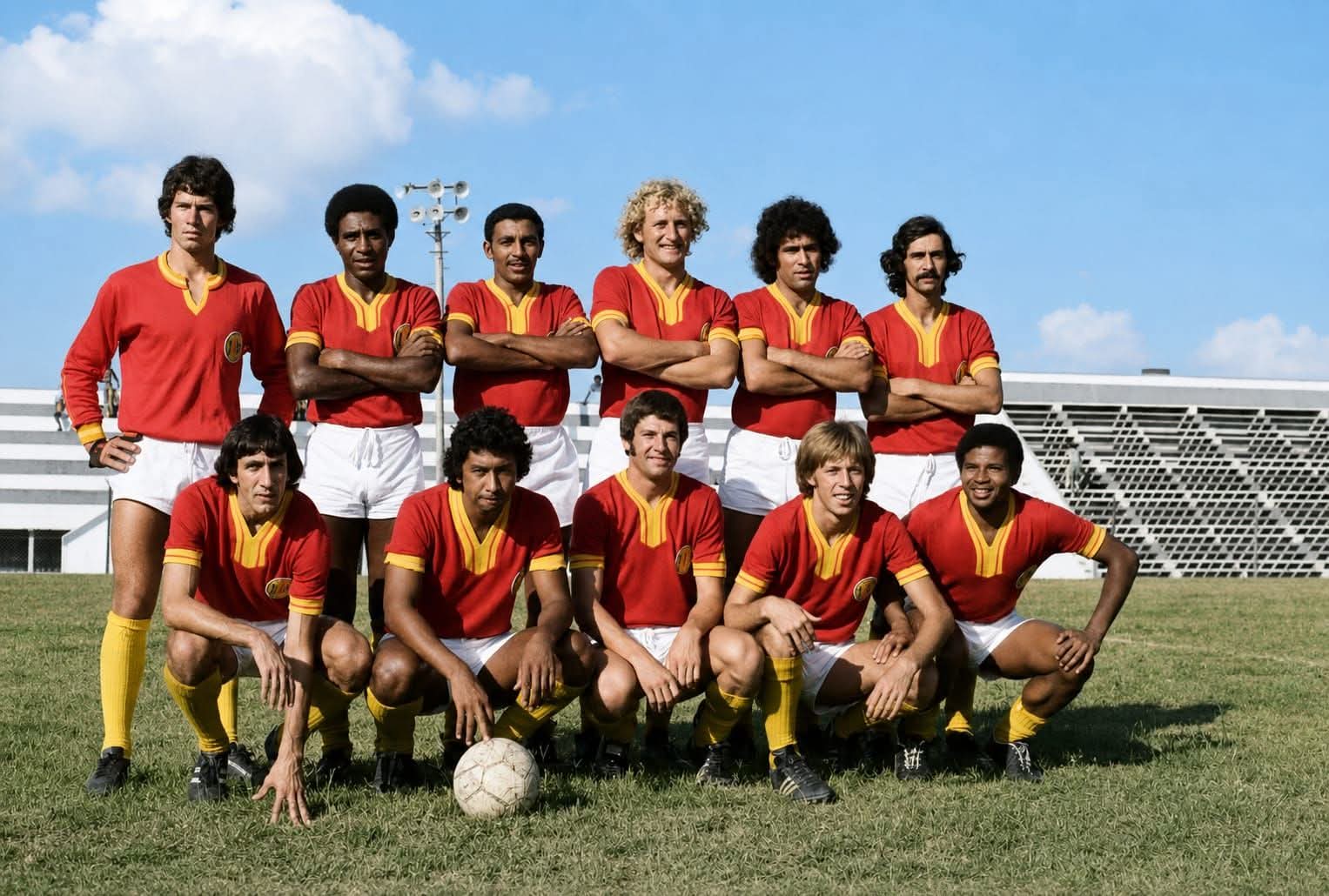
Kit reference image supplied for the production. The image’s date has not been confirmed.
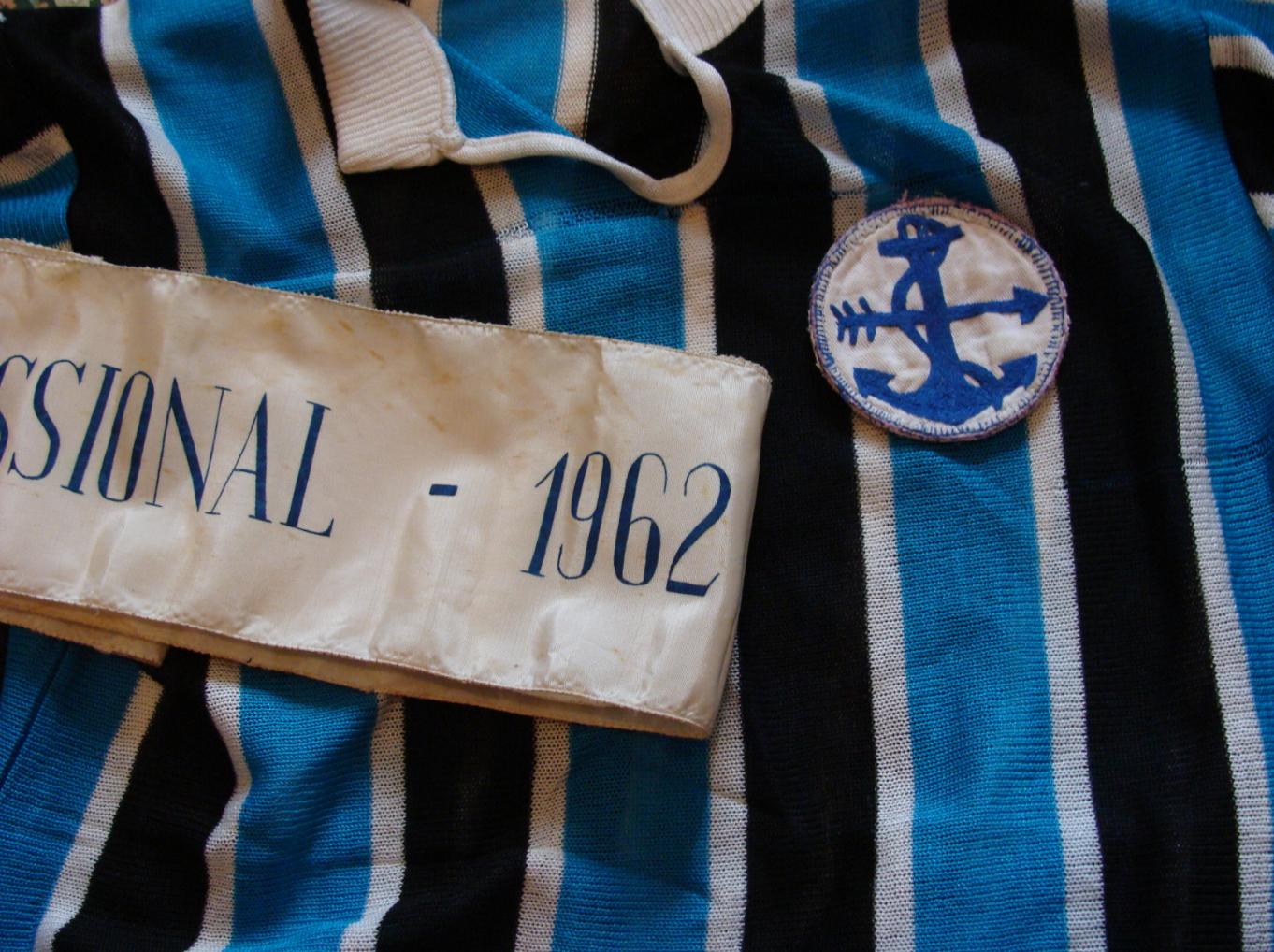
Detail of a preserved shirt used as a reference. The 1962 sash belongs to the photograph and does not date the goal.
We built a basic model of the stadium to establish the covered stand, the terraces, the pitch and the entrances. With that base, we could choose the camera height and position before producing each scene, keeping the spaces connected throughout the film.
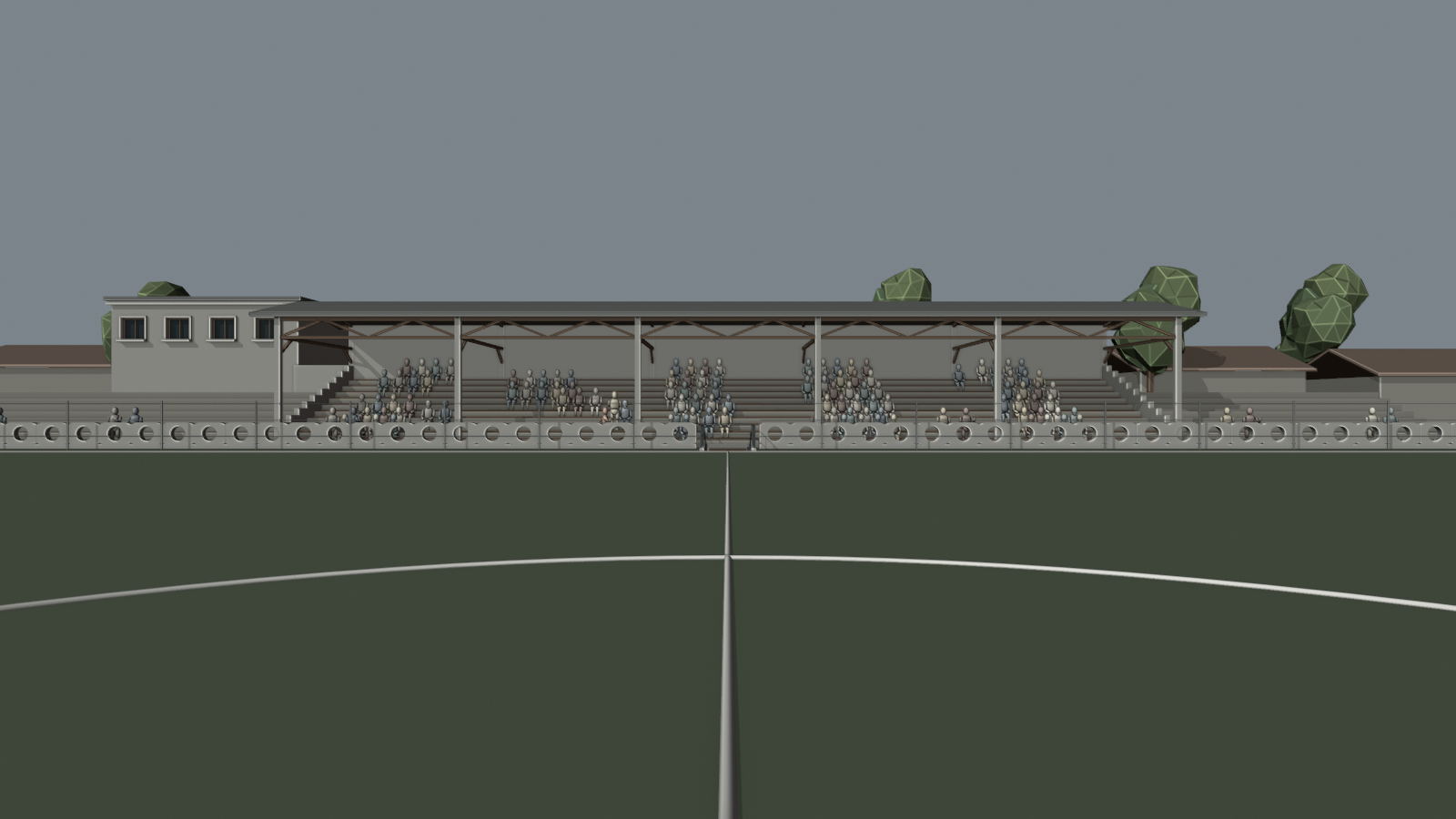
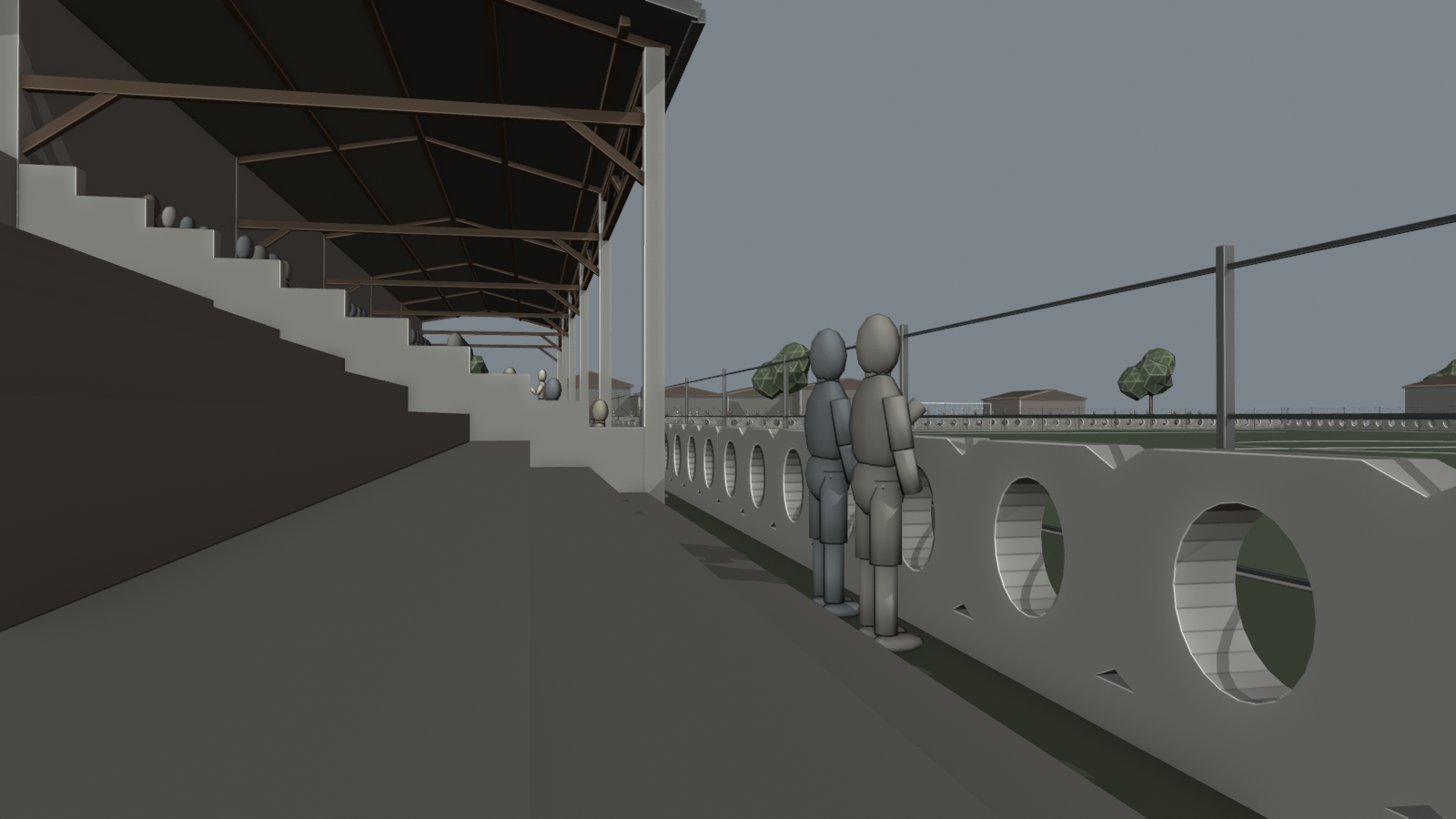
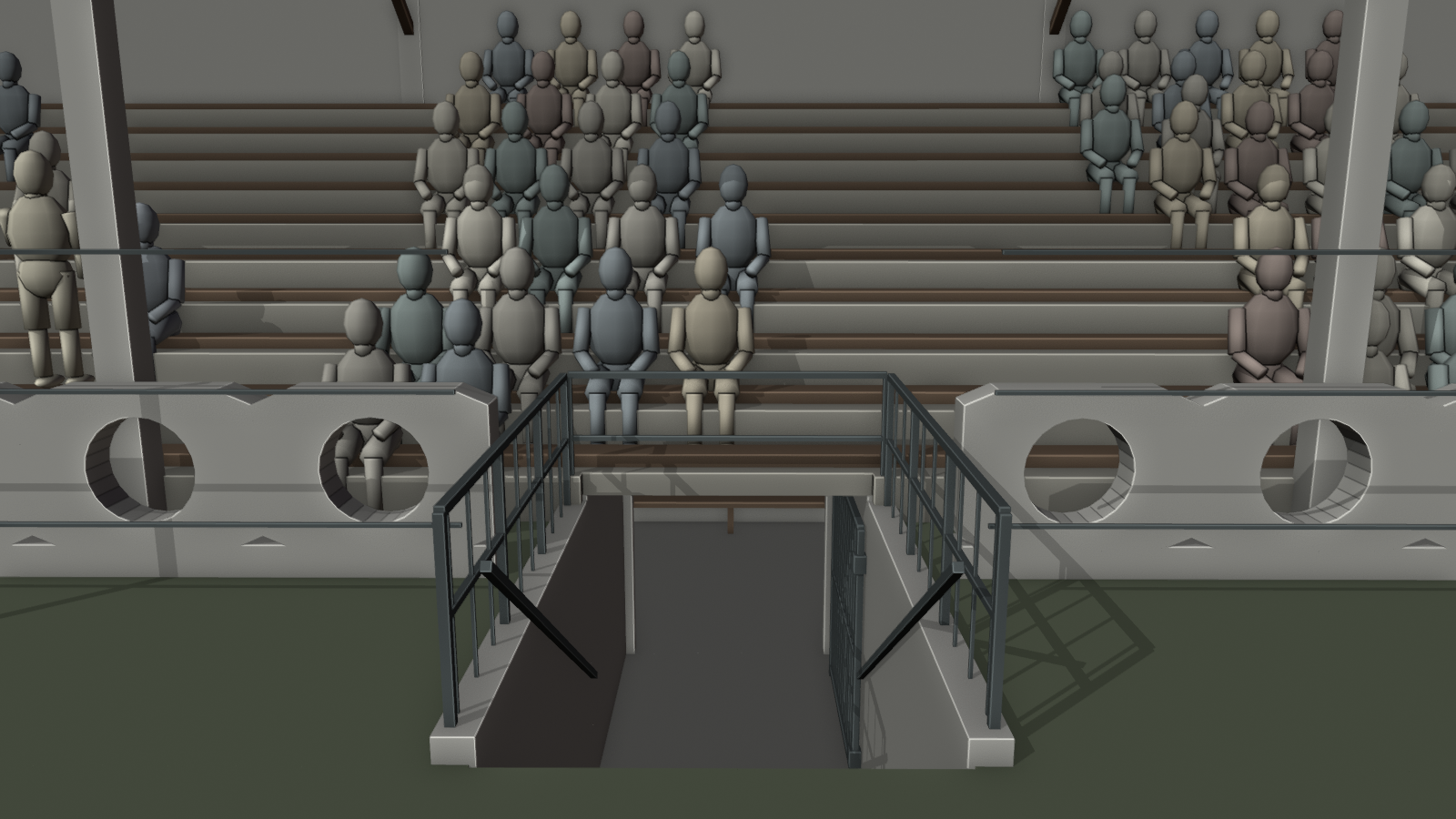
The entrance shows that transition: first the volumes and the camera position, then the setting that appears in the final cut.
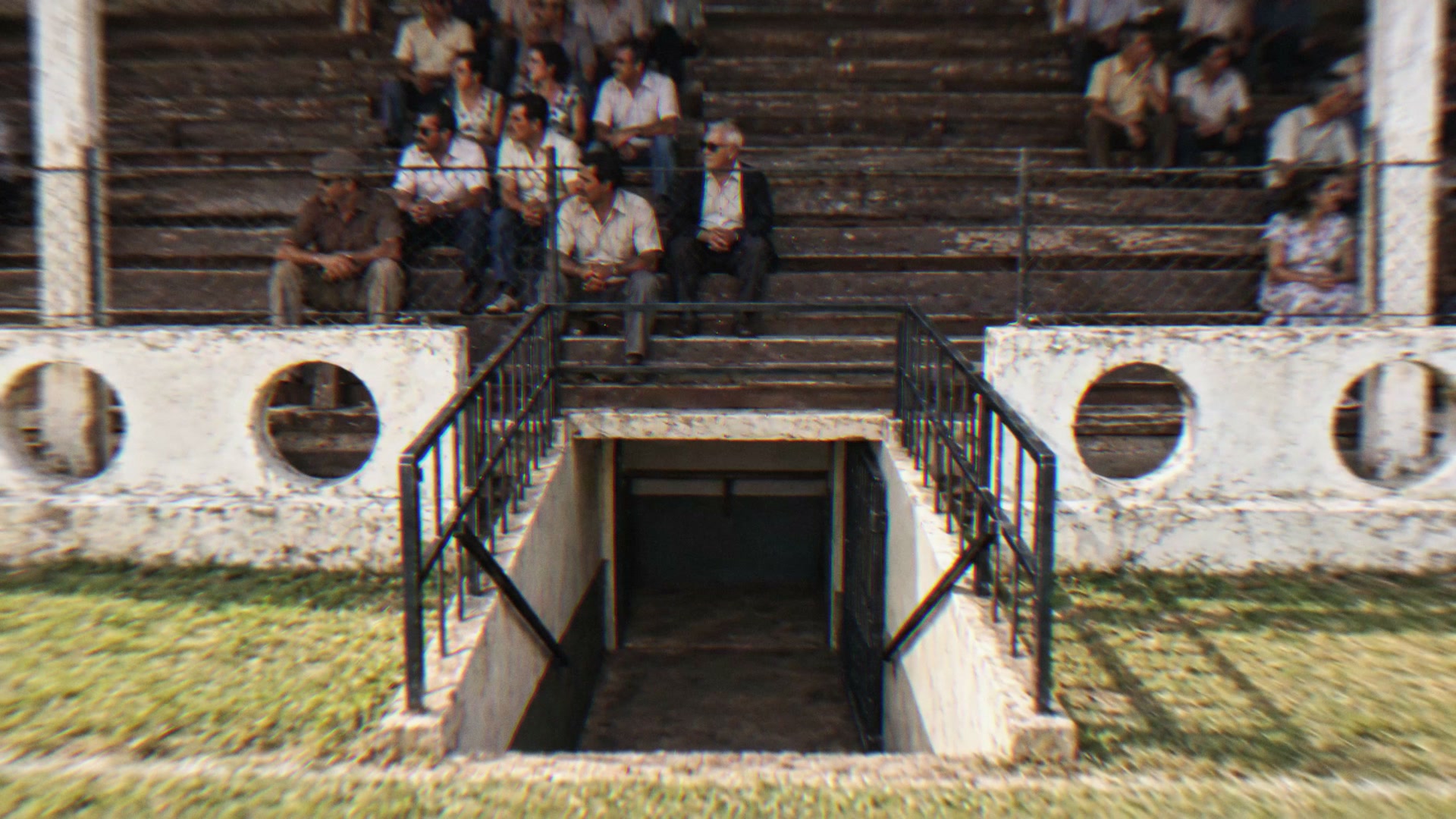
The model establishes the space; details not clarified by the archive were interpreted in the recreation.
The images of Nico supplied by the club guided the character’s appearance. From them, we imagined moments that were not captured in that recording, such as the preparations in the dressing room and the reaction after the goal.
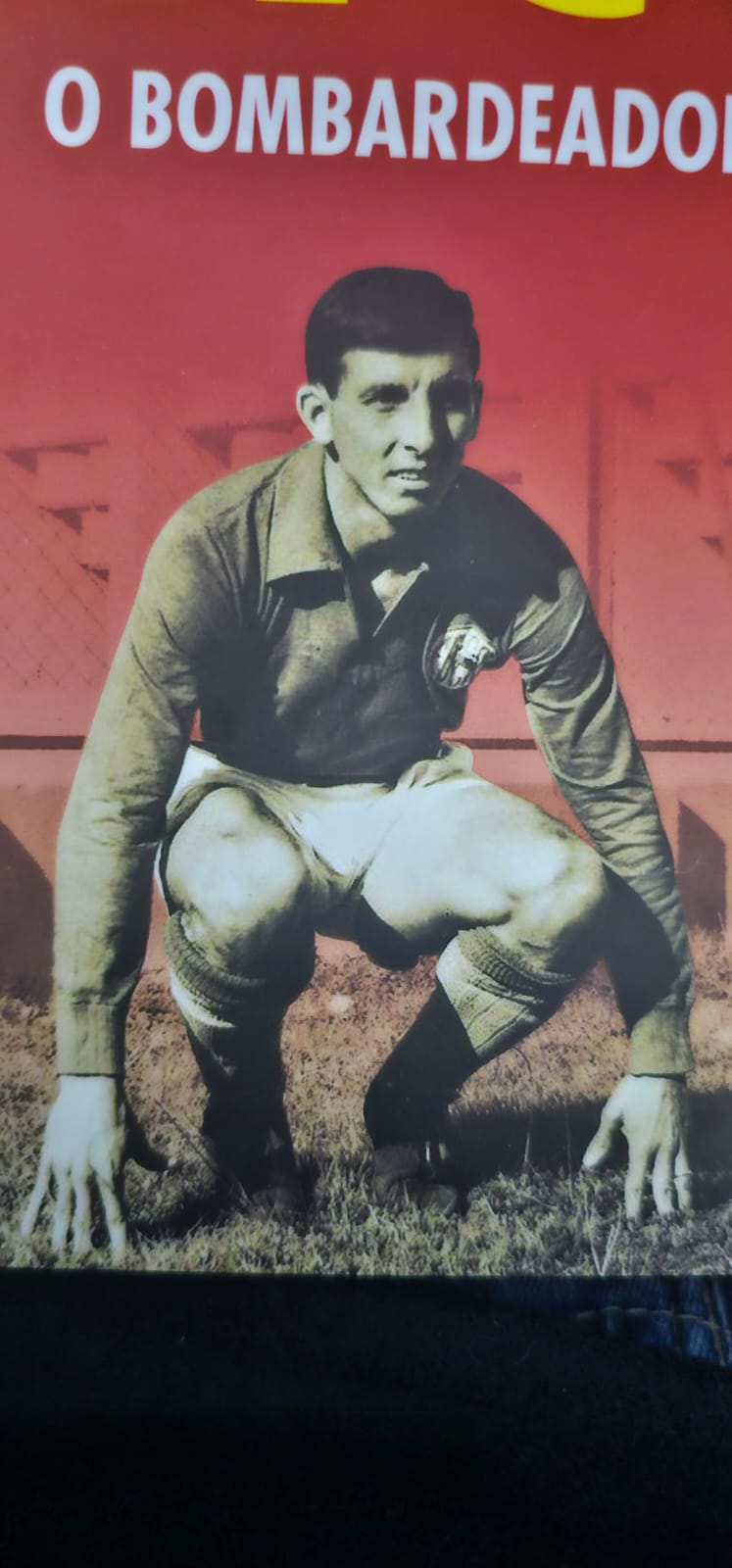
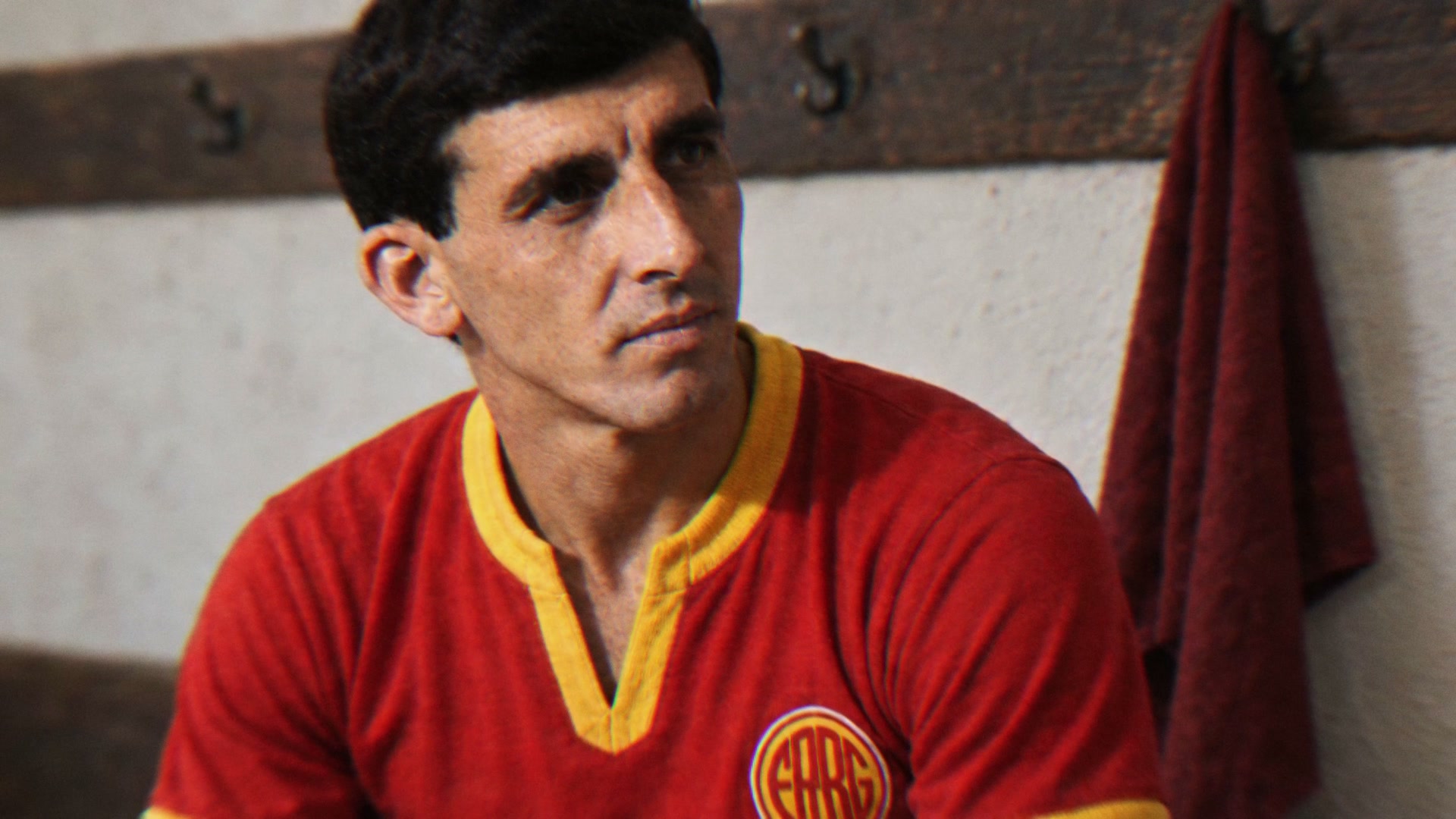
The face has a real reference, but the gesture, the gaze and everything happening around him belong to the staging. The intention was to place Nico within a sequence, with a before and an after to the play preserved by the commentary.

The film is a cinematic recreation, not footage of the match. The photographs marked as archive material are real references supplied for the project. The goal sequence uses the original commentary; the opening commentary was created with AI.
Grupo Oceano records the nickname and the 1967 top-scorer achievement. RSSSF’s list of top scorers gives his tally as 17 goals in that championship.
The opponent, Guarany Atlântico from Santa Maria, is identified in the supplied recording. The sources consulted did not confirm the year or competition of this match. The photographs help reconstruct the stadium, but do not establish the date of the goal.