

Pelotas 1935 has been accepted for presentation in the Creative Work category at the 3rd Hong Kong Association for Digital Humanities Conference (HKADH2027). The event takes place from 21 to 24 January 2027 and is organised by The Education University of Hong Kong.
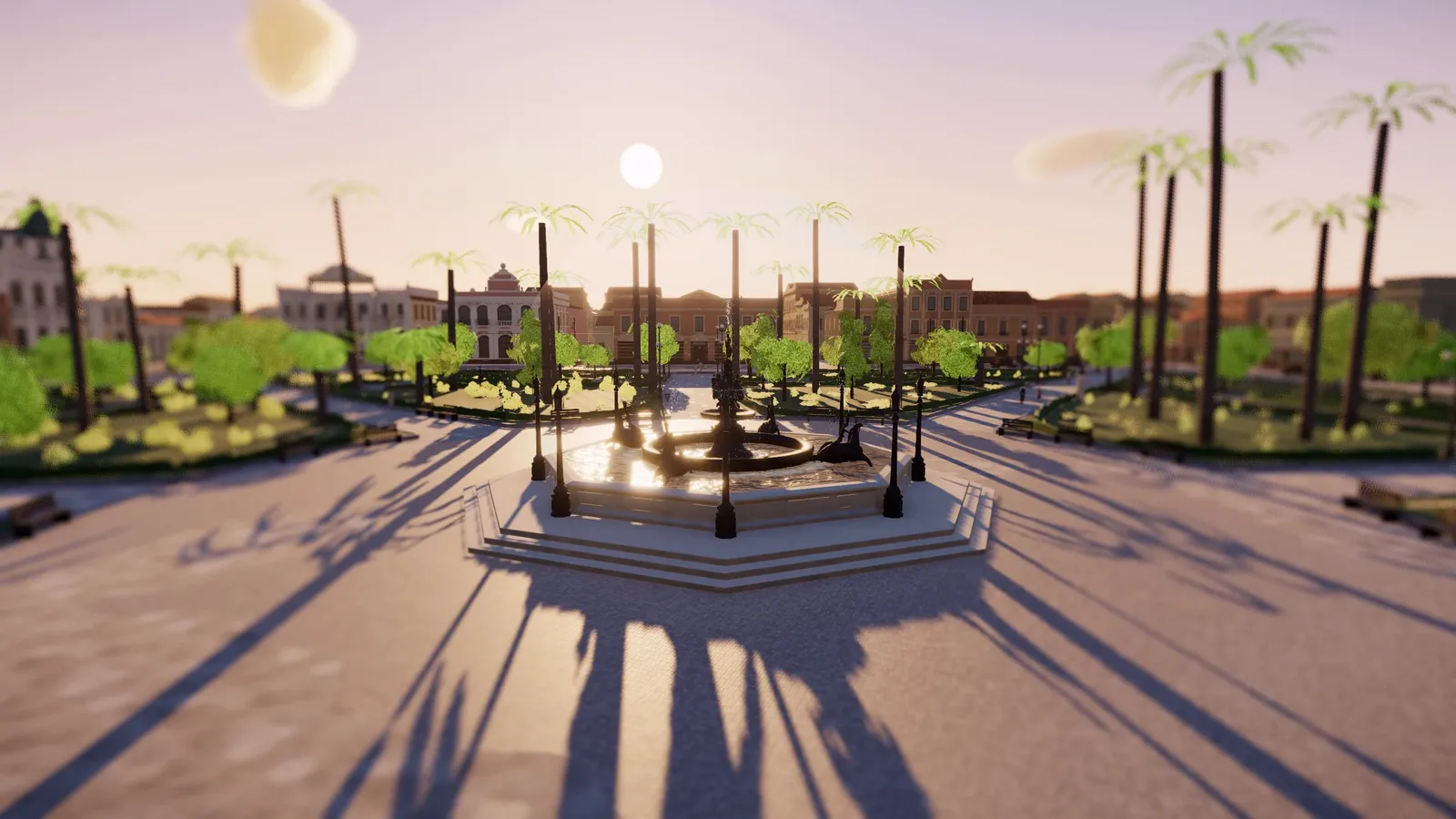
The Studio LLS project, created and directed by Lucas Canez, reconstructs Praça Coronel Pedro Osório and its surroundings in 1935. Located in Pelotas, a city in southern Brazil, the square can be explored in three dimensions through a web browser, with ten interactive landmarks introducing the history of its buildings and gardens.
What the reviewers highlighted
Both reviewers recommended accepting the work and rated its originality, quality and significance as Strong. The first highlighted its value as an example for other digital public-history projects, which bring historical research to wider audiences.
The second drew attention to the relationship between the reconstruction and the information accompanying it. While exploring the square, visitors can also consult the sources and decisions behind its construction. The reviewer saw this as an argument about how historical knowledge is produced and presented.
“There is a clear methodological/epistemological argument embedded in the creative work.”
The quotation comes from the second review, which recommended Strong accept. It recognises a decision that shaped the project throughout the research: making the distinction between documented evidence and interpretation visible to visitors.
From photographs to a place people can explore
The reconstruction draws on archival photographs, postcards, publications and documents about the square and the city. Research into historical images informed the layout of the gardens, paths and façades through a process combining 3D modelling, programming and AI tools.
The experience brings Studio LLS’s research into Pelotas’s memory, previously developed through film and video, into an interactive environment. Visitors choose which places to examine and which information to open. The development of the experience is described in How a city square in 1935 became an interactive experience.
How the project connects with the Hong Kong conference
Under the theme Model/Making: Toward Generative Humanities, the 2027 conference examines models as research tools and forms of cultural production. Its scope includes creative work, heritage, simulations and collaboration between people and artificial intelligence.
One of the announced activities addresses urban memory in Kowloon City, Hong Kong, and ways of documenting places undergoing change. It draws on Digital Kowloon, a project recording long-established shops through video, photogrammetry and oral history. This connection between local memory and digital experiences helps explain the setting in which the Pelotas square will be presented.
Pelotas 1935 is free to visit. Historical references and an introduction to the work are available on the project’s about page, alongside the experience.