The material I received from Football Club Riograndense, in Rio Grande, included photographs of the stadium, kit references, pictures of Nico and a radio recording. From that collection, I created a short film following the preparations for a match, the goal and the celebration of one of the club’s most beloved players.
Nico, known as the Bombardeador, was a top scorer in the Campeonato Gaúcho, Rio Grande do Sul’s state championship. In the recording, Paulo Corrêa, joined by Sérgio Satt, calls a goal he scored against Guarany-Atlântico, from Santa Maria. When the recording begins, the move is already underway. The challenge was to build a film around that fragment.
The film could not be played. Open the video.
I started the film before the move to introduce Nico to people who did not know his story. I wanted the audience to follow his preparations in the dressing room and his entrance onto the pitch before seeing him score.
The stadium also needed to feel in use. Someone tending to the net, supporters looking for somewhere to sit, a conversation in the stands. These small moments helped introduce the place before the match began. They were imagined for the film, drawing on the available references; the photographs did not document each of these actions.
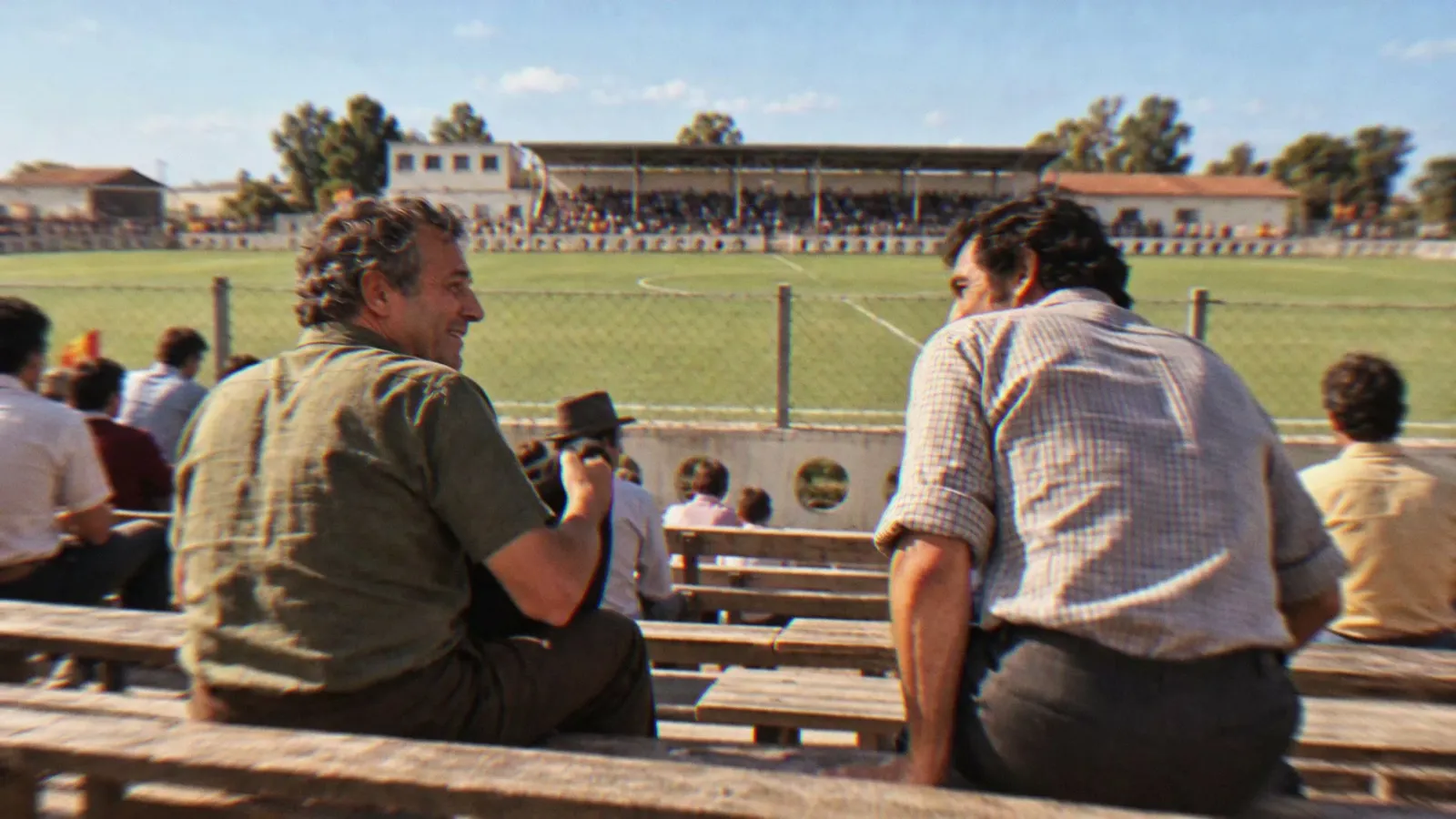
I wanted to film as though I were there, finding room among the supporters and following the players closely. During the celebration, the camera runs with Nico and has to adjust to keep him in view.
That had a considerable influence on which shots made it into the film. Some images that looked beautiful on their own felt staged once they were in the edit. A player who stopped running to celebrate, for instance, broke the momentum coming out of the goal. I needed to look at the whole movement and how it met the next shot.
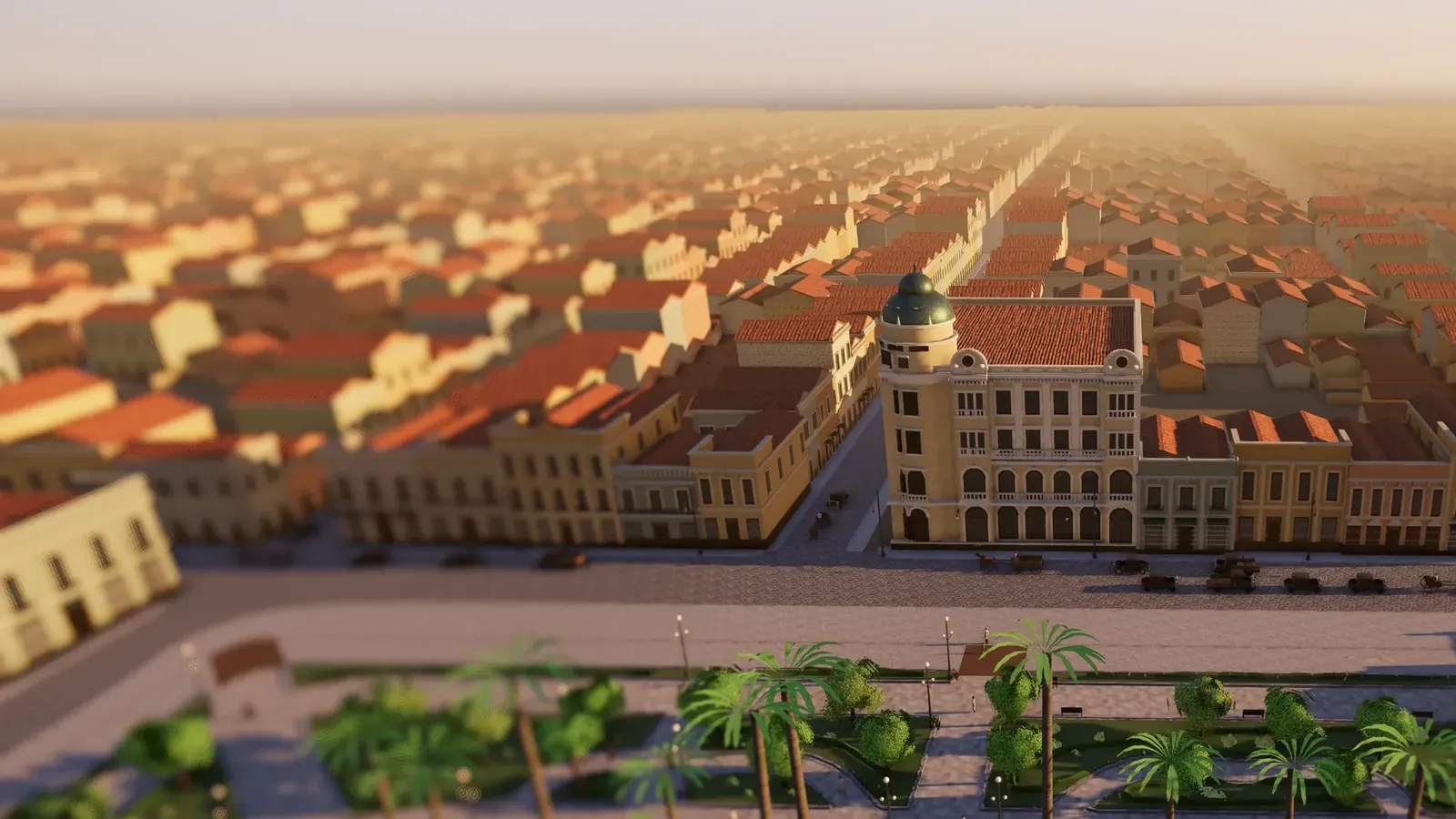
To vary the angles without losing track of the stadium’s layout, I built a basic 3D model in Blender, using the photographs as a guide. It let me choose camera positions and check the placement of the pavilion, stands and goals. Views from that model, together with the historical references, guided the creation of the AI-generated images and animation.
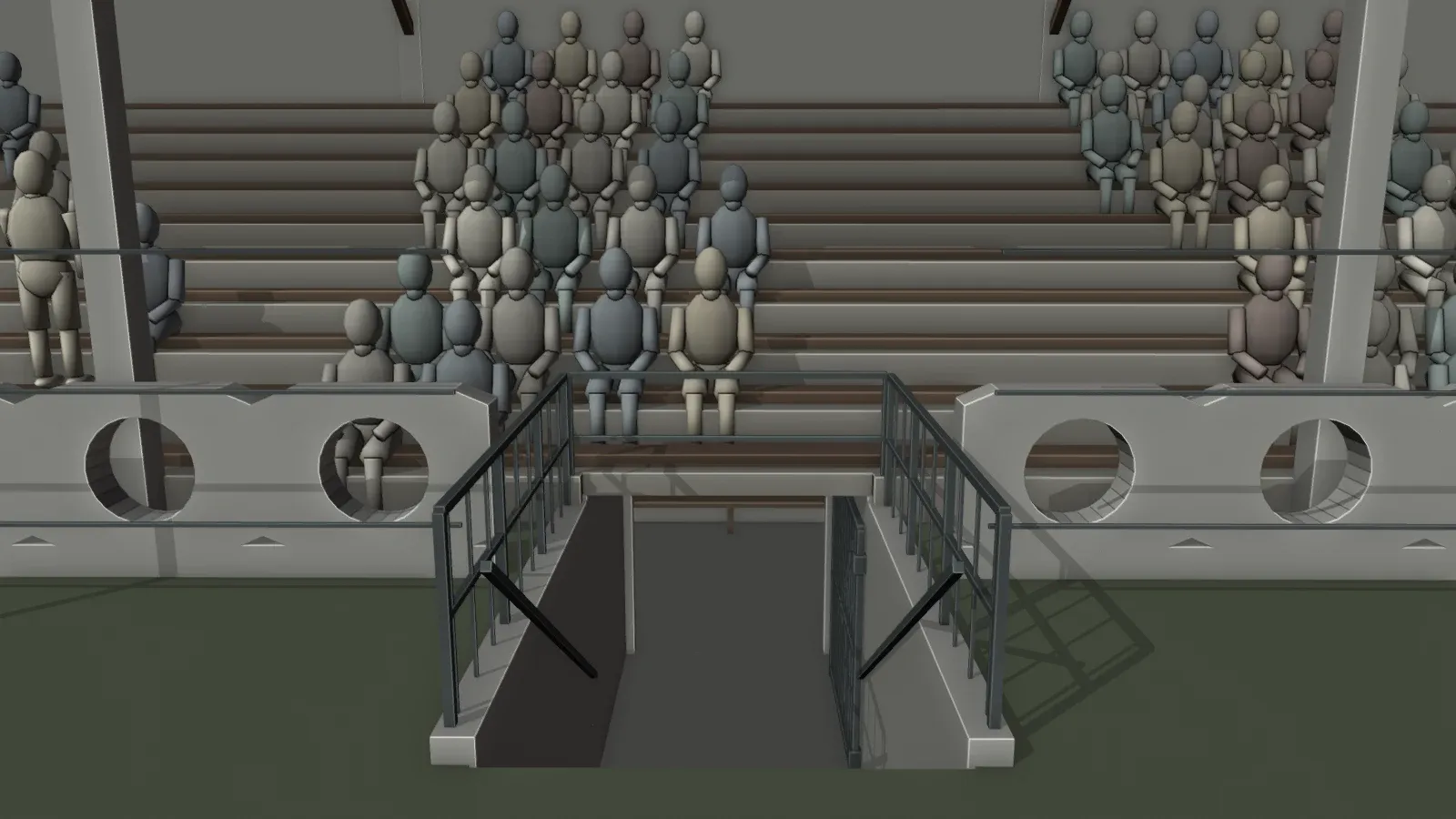
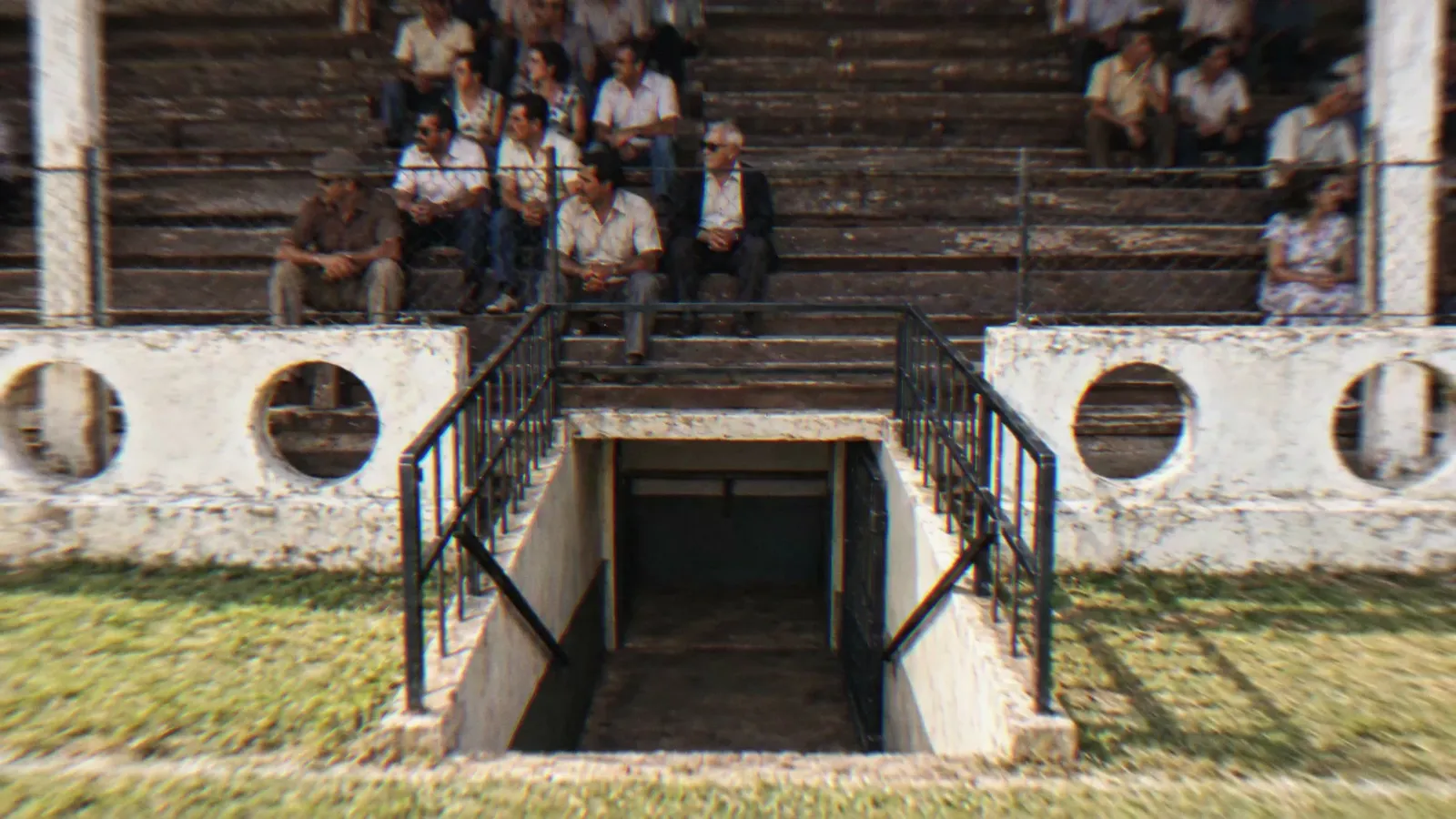
The pitch entrance in the 3D model and the final scene. The model guided camera positioning and the layout of the space.
Sound helped connect those spaces too. In the dressing room, the crowd is muffled. As the players step onto the pitch, it becomes more present. The passages of play before the goal leave room for footsteps, challenges and contact with the ball, preparing the way for the original recording.
For the opening, we created AI-generated commentary to introduce the atmosphere before the match, identified as a recreation. During Nico’s move, we hear the original recording. The film includes dramatised scenes and dialogue. The images are a visual interpretation, not recovered historical footage.
I returned to the recording many times during the edit. It guided the length of movements and the timing of cuts. After the goal, I let the celebration continue as Nico ran, his teammates caught up and the crowd celebrated in the stands. I also wanted to follow what that moment set off around him.
I really enjoyed making this project. We started with only a few references and a recording that dropped straight into the action, and gradually built this whole sequence around it. Seeing the stadium work from different angles and the scenes come together in the edit was one of the most rewarding parts. It also meant a lot to hear that the club liked the result. I finished the film wanting to explore more stories like this, taking what I had learned into the next one.