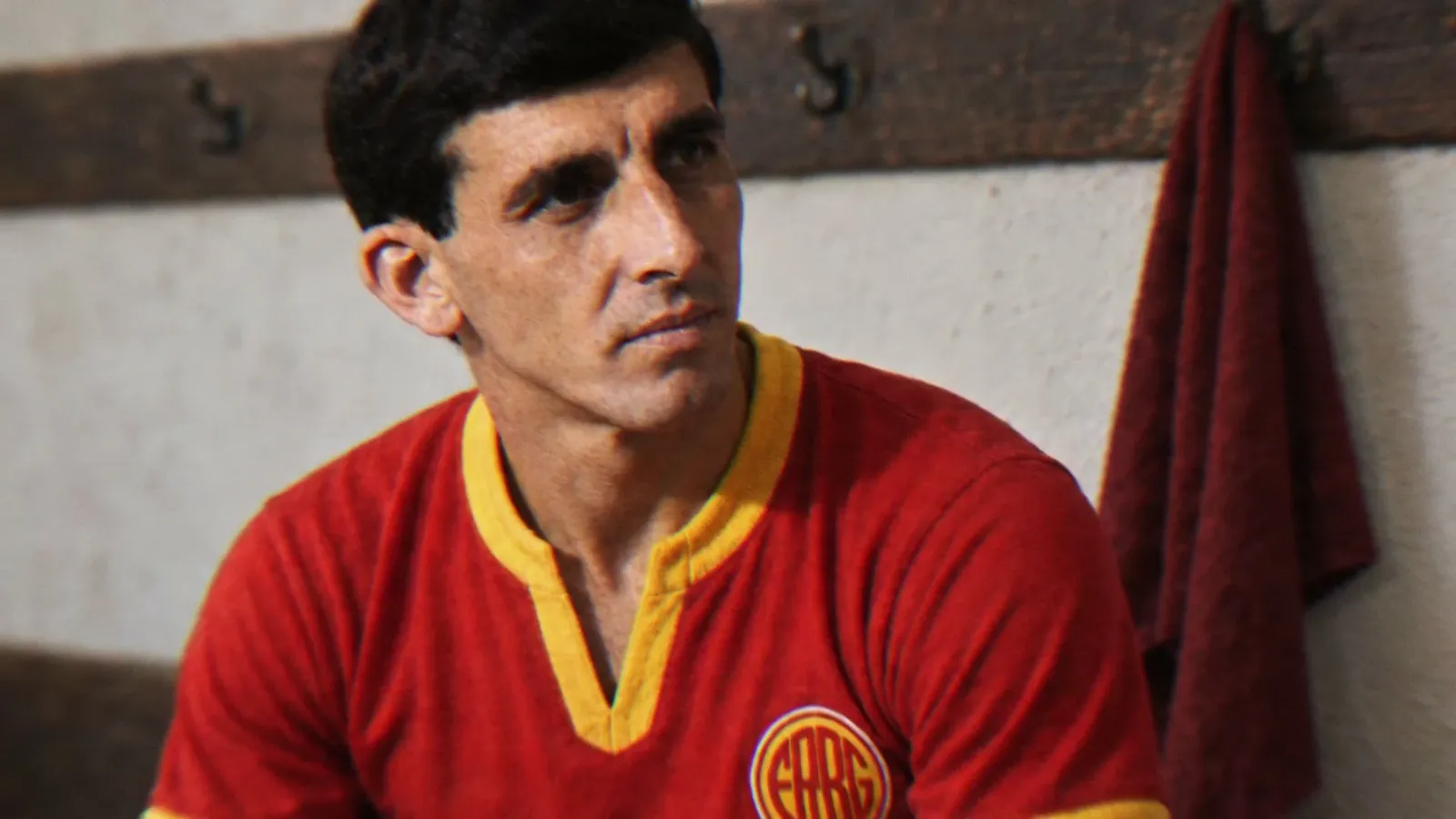
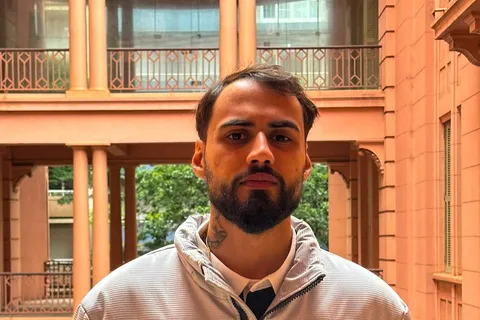
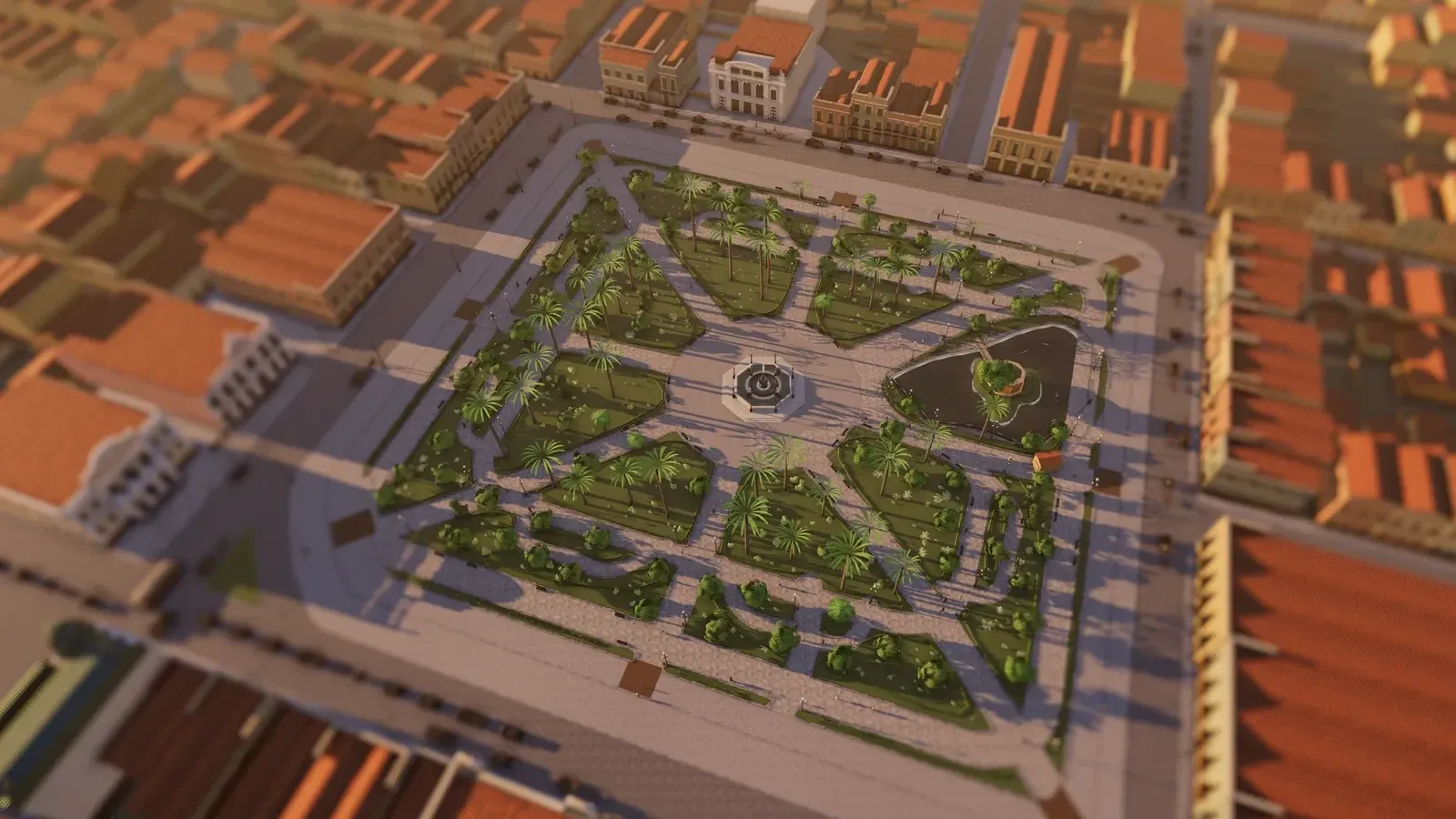
I had already been exploring the memory of Pelotas through film and video when I decided to build Pelotas 1935, an interactive experience recreating Coronel Pedro Osório Square and its surroundings in the centre of this southern Brazilian city. The project runs in a browser and lets people explore the environment for themselves.
The change of format did not begin as a move away from film. It began with the desire to try another way of presenting a place. Historical research, visual direction and decisions about what to show remained central, but became part of a three-dimensional construction.
Visitors also choose where to look
In a video, I can build a sequence of shots and decide how long each image stays on screen. In an interactive experience, part of that choice belongs to the visitor. People can observe the square, approach its landmarks and discover their stories at their own pace.
This does not make visual direction less important. It changes where it operates: beyond thinking about an image, I need to think about an environment where other images can be found. The project took shape at that meeting point between visual creation and exploration.
Building, comparing and choosing again
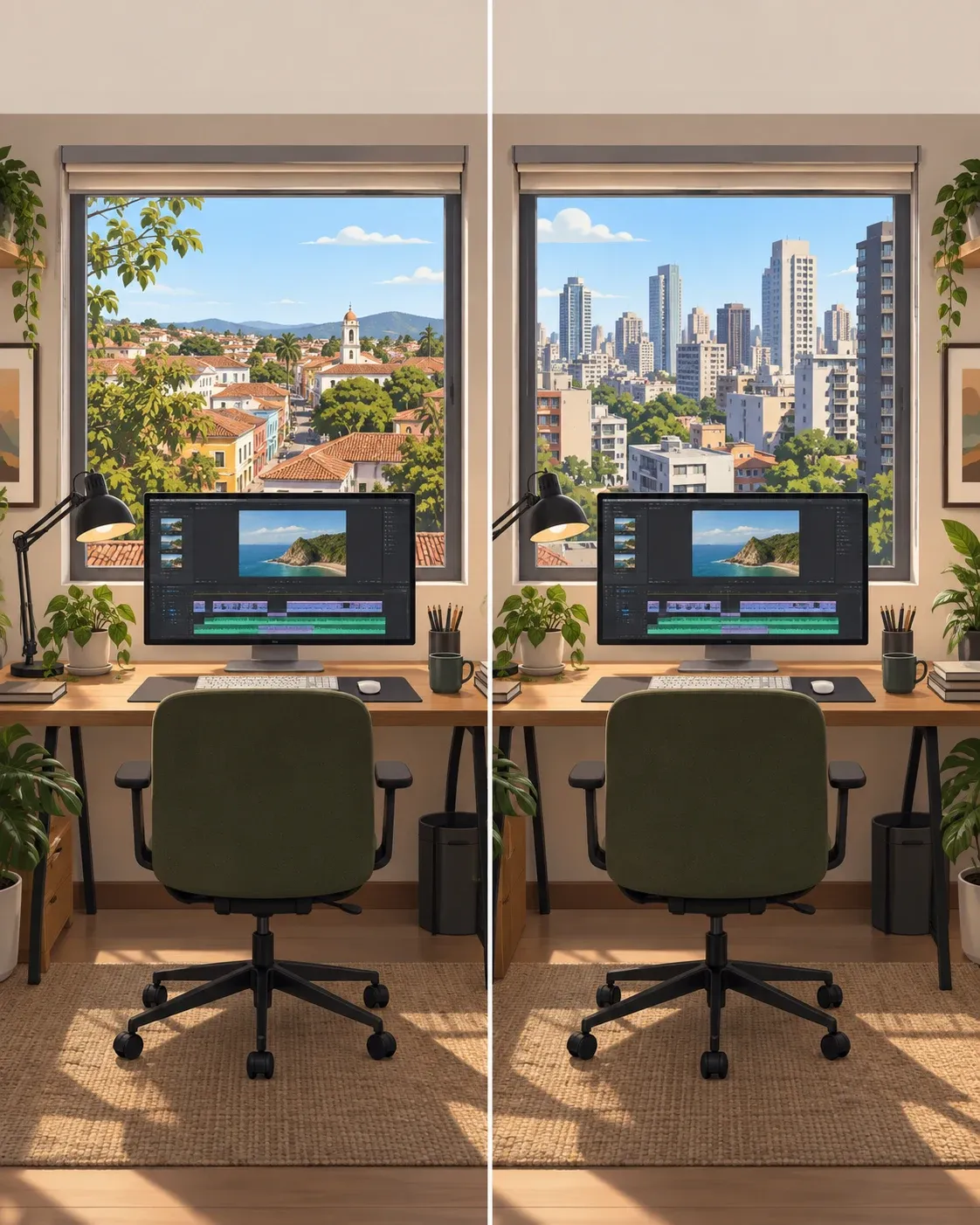
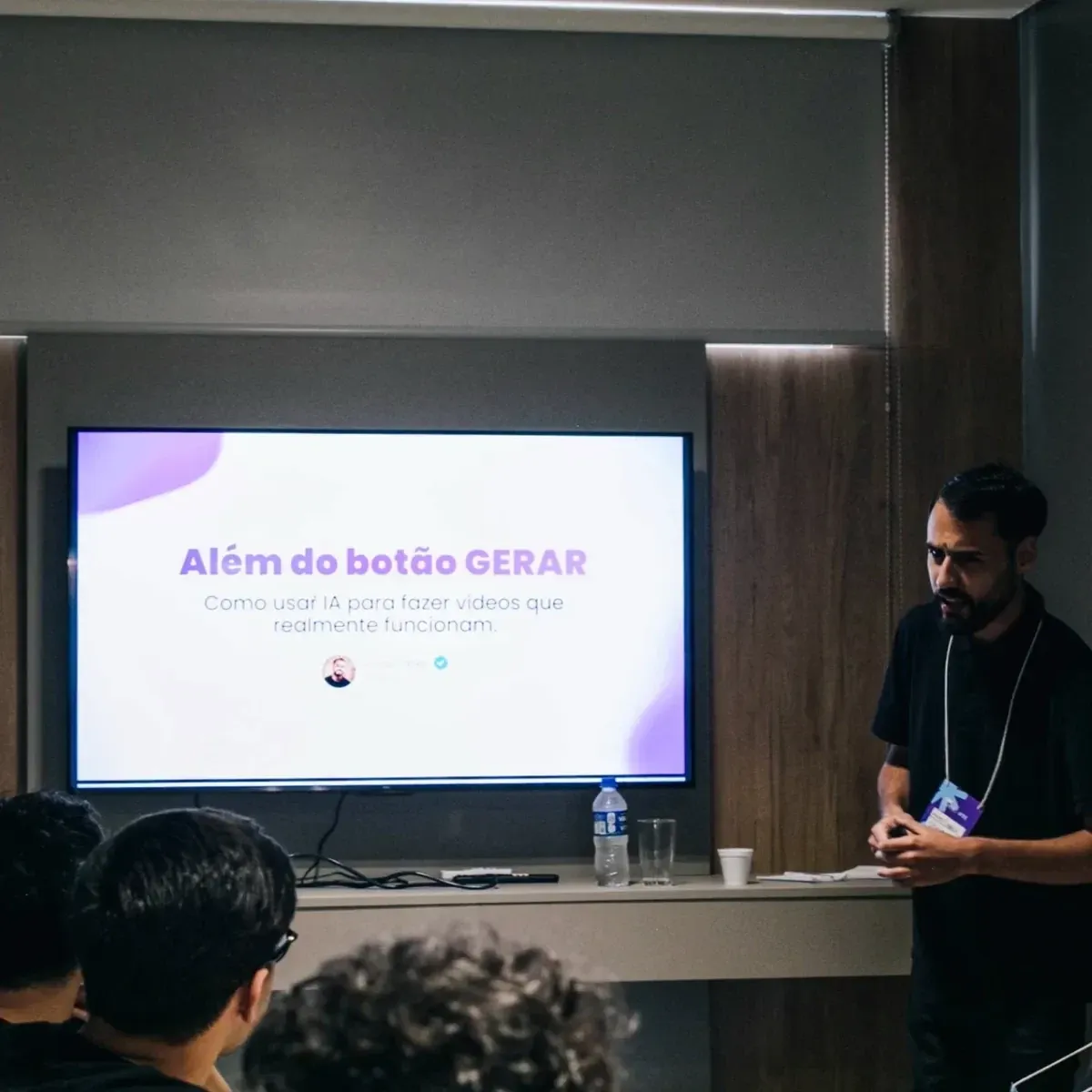
The work brought together modelling in Blender, programming in Three.js and artificial intelligence tools for research and development. I led the decisions, evaluated the results and identified what needed to change.
This way of working was not resolved by generating a single image. There were many rounds of comparison and correction, in which a new reference could alter what was already built. The environment needed to make sense as a place and work for someone arriving through a browser.
A connection with cinema
The experience opened up an area I want to keep developing, bringing my background in directing together with the construction of three-dimensional environments. I am already experimenting with other tools and ways of working in these spaces, including the possibilities they offer for cinema.
Being able to build a set, work with lighting and choose different cameras within it opens up exciting possibilities for storytelling.
This is still an area of experimentation. I prefer to let the next projects develop before announcing formats or dates. For now, Pelotas 1935 is a published experience that offers a way to discover this meeting of research, direction and interaction.
Visit Pelotas 1935 or read the full introduction to the project.